How to Choose Local Booklet Printing Lancaster Businesses Trust
@x465hhuqdv
October 6, 2026 · 8 min read
When you need a printed booklet that represents your work or your brand, the decision of where to get it made matters more than most people realize. I have spent years working with print buyers in Lancaster, from marketing managers to event coordinators to photographers, and the one thing that consistently separates a good print job from a disappointing one is the relationship between the customer and the printer. That is why local booklet printing Lancaster has become such a valuable resource for businesses and organizations in the area. You get the benefit of face-to-face conversations, the ability to see paper samples before you commit, and a team that understands the local market.
I remember a client who came to me after ordering training manuals from a large online printer. The files they uploaded looked fine on screen, but when the boxes arrived, the colors were off, the paper felt flimsy, and the binding started to crack after a few weeks. They had no easy way to fix it because the printer was hundreds of miles away. That experience pushed them to look for a local partner, and they have not used an out-of-state printer since. Choosing a local service means you can walk through the options with someone who knows the equipment and the materials, not just a customer service script.
Understanding Your Booklet Needs
Before you send any files to a printer, it helps to think about how the booklet will actually be used. Are you creating marketing materials for a trade show? Are you putting together event programs for a conference or a wedding? Do you need training manuals for new employees? Or are you showcasing your best work with portfolio printing for a client pitch? Each of these use cases demands different paper, binding, and finish choices.
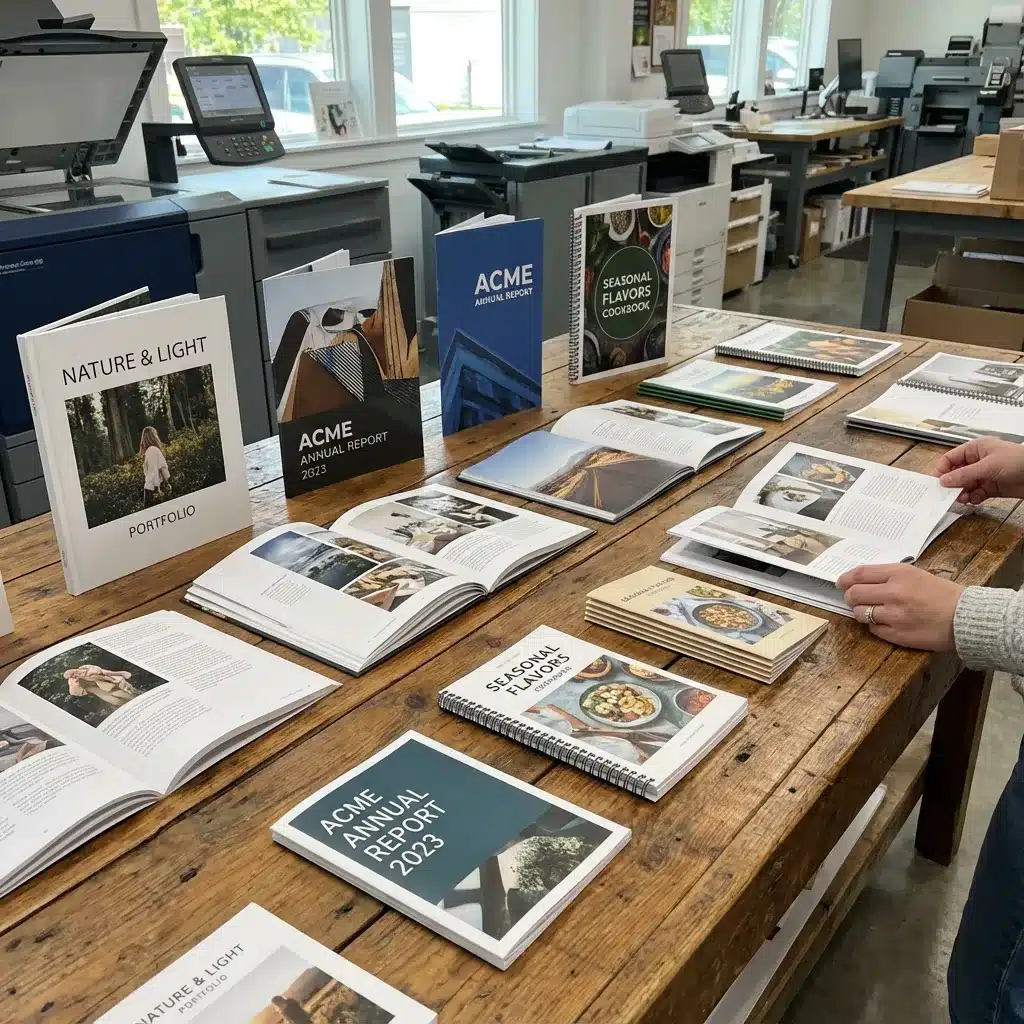
For event programs, you might want something lightweight and easy to fold, maybe saddle stitched with a glossy cover. For a training manual, durability matters more, so a thicker paper with perfect binding could be the right call. For portfolio printing, you want paper that makes your images pop, and you might choose between glossy paper for vibrant photos or matte paper for a more elegant, subdued look. The key is to match the physical object to the impression you want to leave.
Binding Options: Saddle Stitching vs. Perfect Binding
Two of the most common binding methods for booklets are saddle stitching and perfect binding, and they serve different purposes. Saddle stitching involves stapling the pages along the fold line. It works best for booklets with fewer pages, typically up to about 64 pages, depending on the paper thickness. It is fast, cost-effective, and lies flat when open, which is useful for event programs or short catalogs.

Perfect binding, on the other hand, uses glue to attach the pages to a spine. It gives a more polished, book-like feel and works for thicker documents like training manuals or annual reports. The trade-off is cost and turnaround time. Perfect binding takes longer to set up and requires more skill to get right. A good printer will walk you through these options and help you decide based on your budget and the number of pages you need.
Paper and Finish Decisions
Paper choice is one of those details that can elevate a booklet from forgettable to memorable. Glossy paper reflects light and makes colors look more saturated. It is a strong choice for photo-heavy pieces or anything where you want a bright, energetic feel. Matte paper absorbs light and reduces glare, which makes it easier to read under direct lighting. It also feels more tactile and premium, which is why many designers choose it for portfolio printing or high-end marketing materials.
I have seen clients agonize over this choice, and the right answer depends on the content. If your booklet has a lot of text, matte paper can improve readability. If it is full of product shots or artwork, glossy paper might make those images sing. Some printers also offer a combination, like a glossy cover with matte interior pages, to get the best of both worlds.
The Role of Color Accuracy and Standards
Color is where many print projects go wrong. What you see on your monitor is not what comes out of a press unless the printer follows strict color management. Reputable print shops adhere to standards like ISO 12647, which defines how colors should be reproduced across different devices. Certification from Fogra, a leading research institute for the printing industry, is another sign that a printer takes color quality seriously.
When you work with a local printer, you can ask about these standards directly. You can also request a proof before the full run. That proof is your chance to catch any issues with color balance, contrast, or saturation. A printer using Heidelberg presses, for example, is using equipment known for precision and reliability. That kind of investment in machinery usually correlates with a commitment to quality.
Digital vs. Offset: Which One Fits Your Run Size?
The choice between digital printing and offset printing comes down to quantity and budget. Digital printing is excellent for short-run printing, meaning you only need 50 or 100 copies. It has lower setup costs and faster turnaround, sometimes even same-day printing for simple jobs. If you are testing a design or need a small batch for an event, digital makes sense.

Offset printing requires creating plates, which adds upfront cost. But once the press is running, the per-unit cost drops significantly. For runs of 500 or more, offset often becomes more economical. It also delivers slightly sharper detail and more consistent color across the entire run. A good print shop will offer both technologies and help you choose based on your specific numbers and deadlines.
Short-Run Printing for Local Business
One of the advantages of working with a Lancaster-based printer is the ability to order small quantities without paying a premium. Many local businesses need only a few hundred booklets for a specific campaign or event. Large online printers often discourage short runs with high minimums or long lead times. But local printing services understand that your needs are variable. They can accommodate a run of 100 copies one month and 1,000 the next, all while keeping the same quality standards.
Building a Relationship with Your Printer
I have seen the difference a good printer makes when a deadline shifts or a file has a last-minute error. If you have a relationship with a local shop, you can call them, explain the situation, and often get a solution within hours. That kind of flexibility is rare with remote printers who route everything through a ticketing system. The Lancaster Chamber of Commerce regularly connects members with local vendors, and printing is one of the services that benefits most from being nearby. You can visit the shop, see samples of previous work, and talk directly to the person who will run your job.
That personal connection also helps with quality control. When a printer knows your preferences, they can flag potential issues before they become problems. They might suggest a different paper weight because they know how your last job turned out. They might recommend switching from saddle stitching to perfect binding because they know the booklet will be handled frequently. That level of service comes from familiarity, not just a spec sheet.
Practical Advice for Your Next Booklet Project
If you are planning a booklet project, here are a few steps that will save you time and money:
- Start with a clear understanding of your audience and how the booklet will be used. That will guide every other decision.
- Request paper samples from your printer before you finalize your design. What looks good on screen may feel wrong in hand.
- Ask about turnaround times early. If you need same-day printing, make sure the shop can handle it before you design around that deadline.
- Check the printer's color management practices. Ask if they follow ISO 12647 or have Fogra certification.
- Build in time for a proof. Even a quick digital proof can catch layout errors that would be expensive to fix after printing.
These steps may sound basic, but I have seen experienced marketers skip them and end up with booklets that looked nothing like what they expected. Taking the time to communicate clearly with your printer is always worth it.
Why Local Matters
There is something reassuring about knowing exactly where your booklets are being printed and who is handling the job. When you choose local booklet printing Lancaster, you are not just buying a product. You are supporting a local business that employs people in your community and reinvests in the local economy. The Lancaster Chamber of Commerce often highlights the value of keeping business dollars local, and printing is a perfect example. The money you spend stays in the region, and the service you receive is tailored to the needs of Lancaster businesses.
I have worked with clients who tried both national online printers and local shops for the same project. The difference in communication alone is striking. With a local printer, you can call and speak to the same person who will handle your job. You can visit the shop and see a Heidelberg press running. You can ask about paper options and get an honest recommendation, not a upsell. That kind of transparency builds trust, and trust leads to better print work.
When you need a booklet that reflects well on your organization, whether it is a training manual, an event program, or a portfolio piece, the smartest move is to partner with a printer who knows the territory. Local booklet printing Lancaster gives you access to expertise, quality equipment, and personal service all in one place. The next time you have a project, consider walking into a local shop and having a conversation before you upload any files. You might be surprised how much better the results can be.